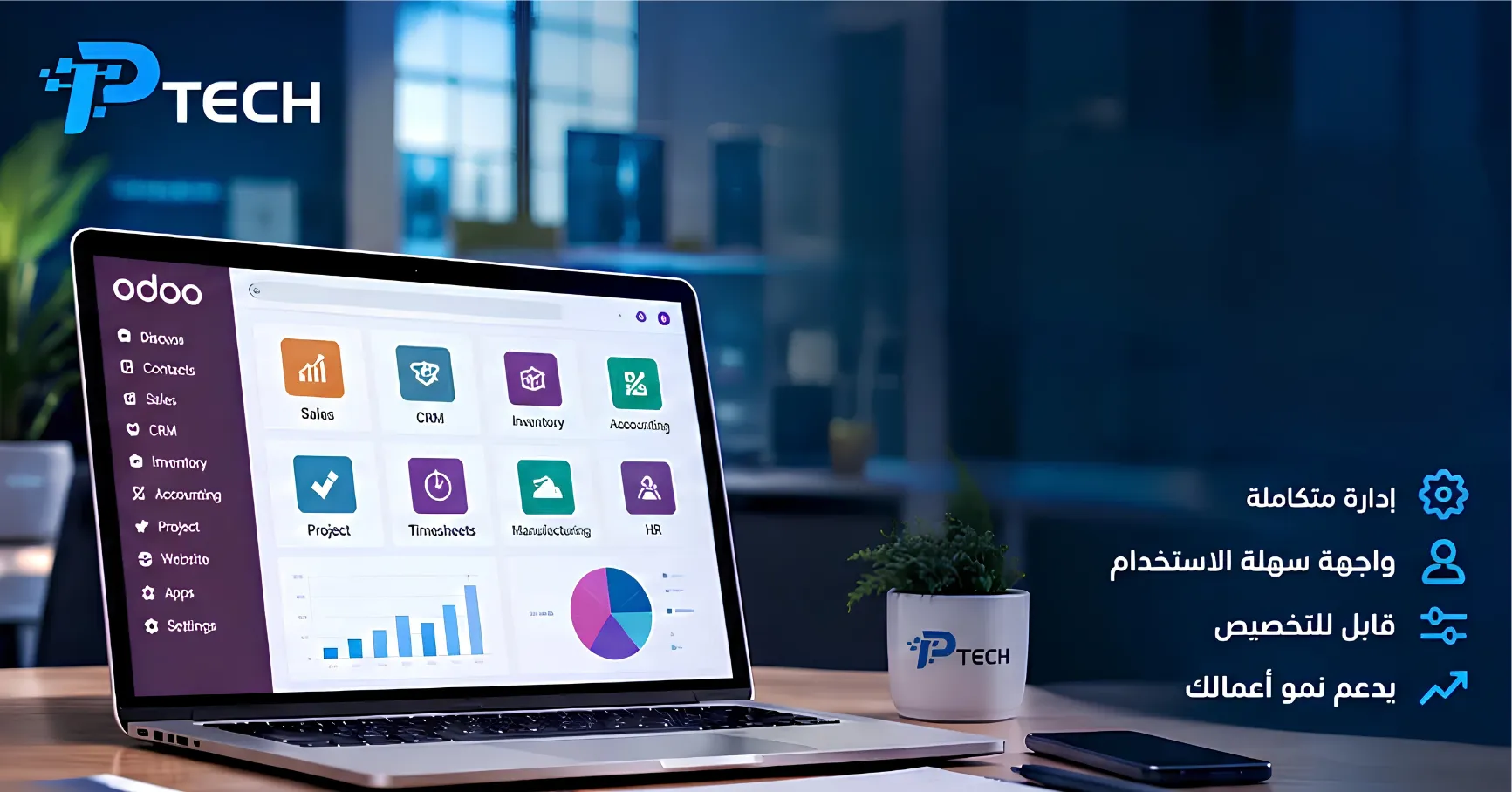
Odoo Pros and Cons: An Honest Review
Anyone searching for "Odoo" ends up reading dozens of articles that praise the system without reservation. This article is different: we built it on an analysis of real user reviews on platforms such as G2, Capterra, Trustpilot, TrustRadius, and Gartner Peer Insights to give you the full picture — the strengths users genuinely agree on and the weaknesses that keep coming up in their complaints, without exaggerating in either direction.
The quick takeaway: Odoo is a powerful, flexible system that offers competitive value, but its success depends heavily on the quality of planning and the implementation partner — more than on the system itself. Companies that go into the project with realistic expectations and solid planning get excellent results, while companies that treat it like "off-the-shelf software installed in a single day" often run into real problems.
Odoo Advantages: What Users Actually Agree On
1. Flexibility and Modular Customization
The point that comes up in user reviews more than anything else is the modular architecture: you activate only the apps you need and add more later without rebuilding the system from scratch. This gives small businesses the ability to start small (for example, with accounting only) and expand gradually as their needs grow.
2. True Integration Across Departments
Users who moved from separate tools (Excel + accounting software + a standalone CRM) describe integration as the biggest tangible benefit: a quotation automatically becomes an invoice, and the invoice updates inventory and accounting at the same moment. This unified database is the core of Odoo's real value, not just a marketing feature.
3. A Genuinely Free Version to Try Before You Commit
Unlike most major ERP systems, which require a sales call and a contract before you even see the system, you can try Odoo Community — or even a single app — for free to evaluate how well it actually fits the way you work before making any financial commitment.
4. A Relatively Easier Interface Than Traditional ERP Systems
In G2 reviews, the interface is repeatedly described as "easy to use" and "intuitive" compared with heavier, classic ERP systems. This does not mean there is no learning curve (we will cover that in the disadvantages section), but the overall design is more modern and lighter than that of traditional competitors.
5. An Active Community and Continuous Updates
Odoo has an active developer community that contributes thousands of additional modules, alongside a major annual release from the company itself. Users note that the team responds effectively to improvement requests and continuously fixes issues across releases.
6. Competitive Value for the Capabilities Offered
Regardless of specific figures (which vary by project size, number of users, and modules), most people who have compared Odoo with larger systems such as SAP or NetSuite agree that the "capabilities-to-cost" ratio clearly favors Odoo, especially for small and medium-sized businesses.
7. Flexible Integration via API
Developers and companies that need to connect Odoo to external systems (payment gateways, shipping platforms, marketing tools) praise the flexibility of its application programming interfaces (APIs), which makes it easier to build custom integrations without re-engineering the entire system.
Odoo Disadvantages: The Real Problems Users Mention
1. Customization Requires Real Technical Expertise
This is by far the most frequent complaint across almost every review platform. The basic setup is simple, but any real customization (custom reports, non-standard workflows, complex integrations) requires a developer experienced in Python, not an ordinary user. Those who treat Odoo like "ready-to-install office software" often discover this reality too late.
2. A Real Learning Curve at the Start
Many users described the initial phase as more complex than the marketing materials suggest, especially when activating several interconnected apps at once without a clear process map in advance. Teams that start without clear documentation of their internal processes are the most likely to feel frustrated in the first few weeks.
3. Implementation Quality Depends Heavily on the Implementation Partner
This is the most important point in this entire article: the biggest difference between a successful and a failed Odoo experience usually comes down not to the system itself, but to the expertise of the partner (Odoo Partner) who implemented the project. Multiple reviews on Trustpilot and Gartner document projects that stalled due to poor planning, unclear communication, or an insufficient understanding of industry requirements (especially in manufacturing or regulated industries). In these cases, the system itself was "technically sound," but the implementation was not.
4. Compatibility Issues When Upgrading Between Versions
Some users pointed out that new major releases sometimes introduce significant structural changes that do not always preserve full compatibility with custom modules built on older versions. This means any deep custom code requires an ongoing maintenance budget with every major upgrade, not just a one-time cost.
5. Some Modules Are Less Deep "Out of the Box" Than Expected
Some specialized reviews (particularly in areas such as manufacturing, shipping, and receiving) note that the core out-of-the-box functionality may be less deep than complex operations require, and that closing this gap calls for additional customization rather than relying entirely on the default settings.
6. Confusion Over What "Support Packages" (Success Packs) Include
An important word of caution: some customers have complained about confusing the "Success Packs" sold by Odoo (which are closer to training and guidance) with a full implementation service carried out by the Odoo team on your behalf. It is important to clarify the exact scope of any support or implementation contract before signing, to avoid unrealistic expectations later.
7. An Important Warning About Database Ownership
One of the most serious documented complaints (although relatively rare): cases in which the customer's database was created under the implementation partner's internal account instead of the company's own account, which later led to access and control problems when a dispute arose with that partner. Direct practical advice: always make sure your company's Odoo database is registered under your own account (Odoo.com Account) and not under the implementation partner's account, regardless of who handles the technical setup.
Summary Table: Pros vs. Cons
Pros | Cons |
Flexible modular architecture — start small and expand later | Deep customization requires an experienced developer |
True integration across all departments on a single database | A real learning curve in the first few weeks |
A free version to try before any commitment | Success depends heavily on the quality of the implementation partner |
A more modern, lighter interface than traditional ERP | Potential compatibility challenges when upgrading between versions |
An active community and continuous annual updates | Some specialized modules are less deep "out of the box" |
Competitive value for the capabilities offered | The scope of support contracts must be clarified precisely in advance |
Highly flexible integration via API | You must verify who actually owns the database |
Who Is Odoo Right For — and Who Is It Not?
Odoo is a strong choice if you:
Are a small or medium-sized business that wants to unify scattered operations (accounting, sales, inventory) in a single system instead of separate tools.
Have, or can access, a technical team (in-house or through a trusted partner) capable of proper planning and implementation.
Are looking for a system that can scale gradually as your company grows without having to replace the entire platform later.
Odoo may be a challenge if you:
Are a very small business with very simple operations that really needs nothing more than a lightweight accounting tool.
Expect a "plug-and-play" system that is up and running within a few days without any prior planning of your processes.
Operate in a heavily regulated industry that needs deep, ready-made functionality immediately without any additional customization.
Practical Tips to Avoid the Most Common Problems
Document your internal processes before you start — do not begin implementation without a clear map of how work actually flows in your company today.
Choose your implementation partner with great care — ask for real references from past customers in your specific industry, as this is the single most important factor in project success, as we saw above.
Request a precise written explanation of what any support contract or "Success Pack" includes before signing.
Verify ownership of the database account as soon as it is created, and make sure it is under your company's name.
Start with a limited pilot phase in a single department before rolling the system out across the entire company.
Set aside an annual maintenance budget if you have deep custom code, in anticipation of major version updates.
Conclusion
Odoo is neither a "magic solution" nor "bad software" — it is a powerful system that is genuinely capable of delivering excellent results, but it rewards good planning and punishes haste. The gap between the success stories and the failure stories you read online usually comes down not to the system itself so much as to the quality of planning and the implementation partner. If you go into the project with realistic expectations, document your processes well, and choose a competent partner, you will most likely join the ranks of satisfied users rather than the opposite.
Frequently Asked Questions
Is Odoo difficult to use? Most users consider day-to-day use, after proper setup, to be relatively easy and intuitive. The real difficulty lies in the initial setup and customization phase, not in daily use afterward.
Does the quality of Odoo really depend on the implementation partner? Yes, to a very large extent, according to user reviews across multiple platforms. Choosing a partner with real experience in your industry is the single most important decision for the success of any Odoo project.
Does the cost of Odoo vary significantly between projects? Yes. The actual cost depends on the number of users, the required modules, the level of customization, and the type of hosting. That is why we do not quote fixed figures in this article — see our article [Odoo Pricing in Saudi Arabia 2026] for actual pricing details.
Should I worry about the ownership of my data in Odoo? This is a legitimate question that deserves attention: always make sure the database account is registered directly in your company's name on the Odoo platform, not under the implementation partner's account, to avoid any access issues in the future.
Is Odoo worth the risk compared with other systems? Based on user reviews, Odoo delivers a very high value-to-capability ratio, specifically for small and medium-sized businesses. For large, highly complex enterprises, it may be worth comparing it with other systems — which is what we discuss in the article [Odoo vs SAP: A Comprehensive Comparison].